
Going the Extra Mile for Hip Dysplasia

Miles4Hips is a patient-driven collective that is dedicated to raising hip dysplasia awareness, supporting the efforts of national and international organizations who support and advance hip dysplasia care, providing information and resources for the hip dysplasia community, and promoting the enjoyment of movement and miles in all people for healthy hips and minds.
Miles4Hips is a patient-driven collective for those affected by hip dysplasia. Read more about our mission, vision and goals.
Latest Facebook Posts

Miles4Hips
1 day 20 hours ago
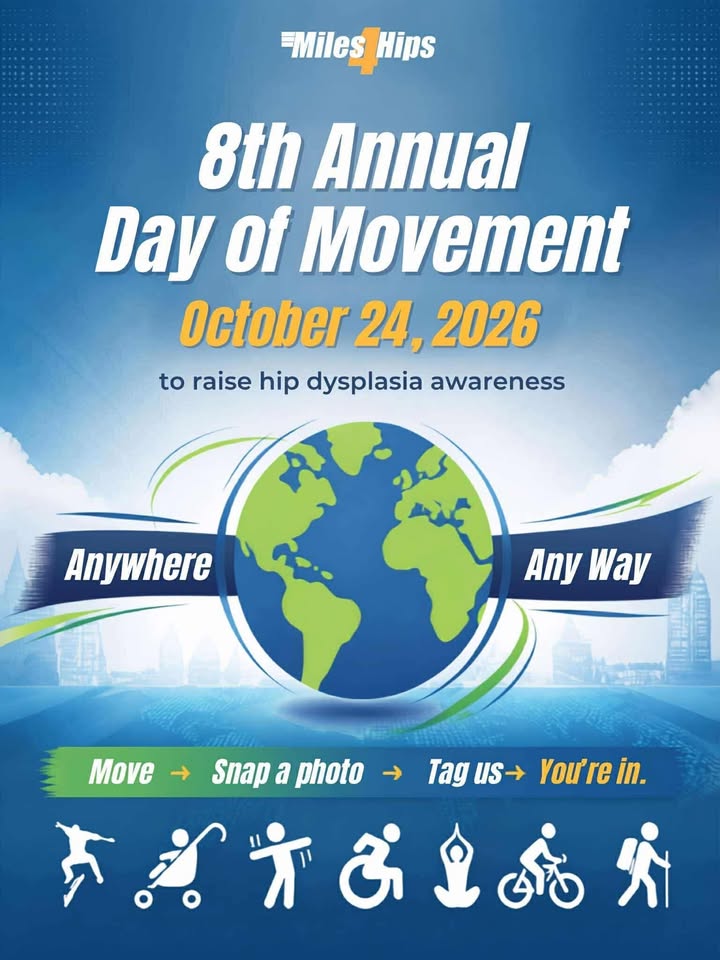
Join a local event or create your own! Follow the link to learn more: miles4hips.org/day-of-movement-global-hip-dysplasia-awareness-event-2026
Miles4Hips
4 days 18 hours ago
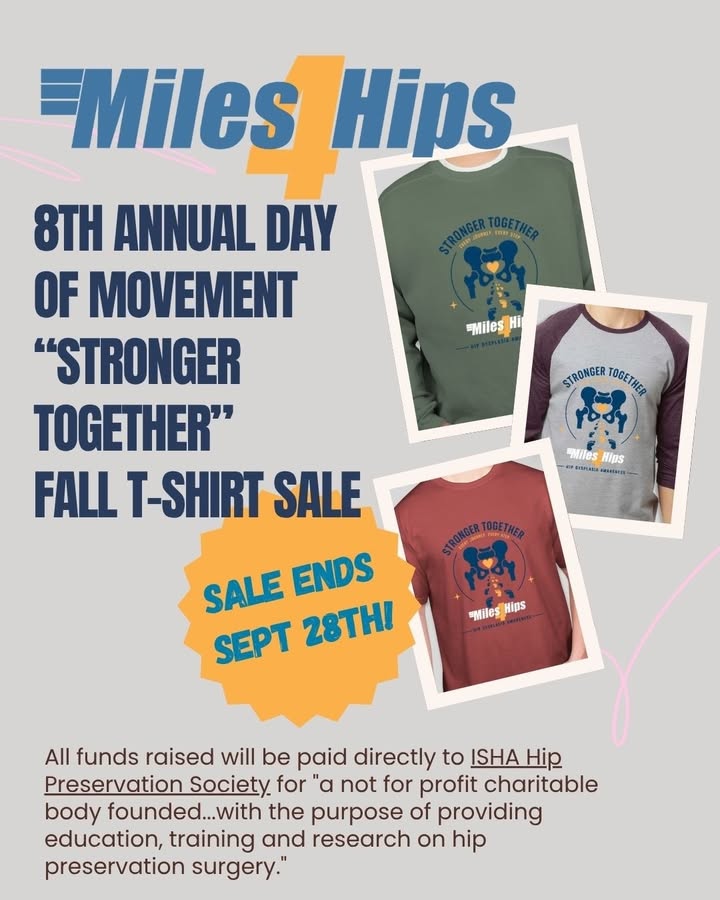
Don’t forget to order your t-shirt before the deadline! www.customink.com/fundraising/miles4hips-stronger-together-fall-t-shirts
Miles4Hips
6 days 22 hours ago
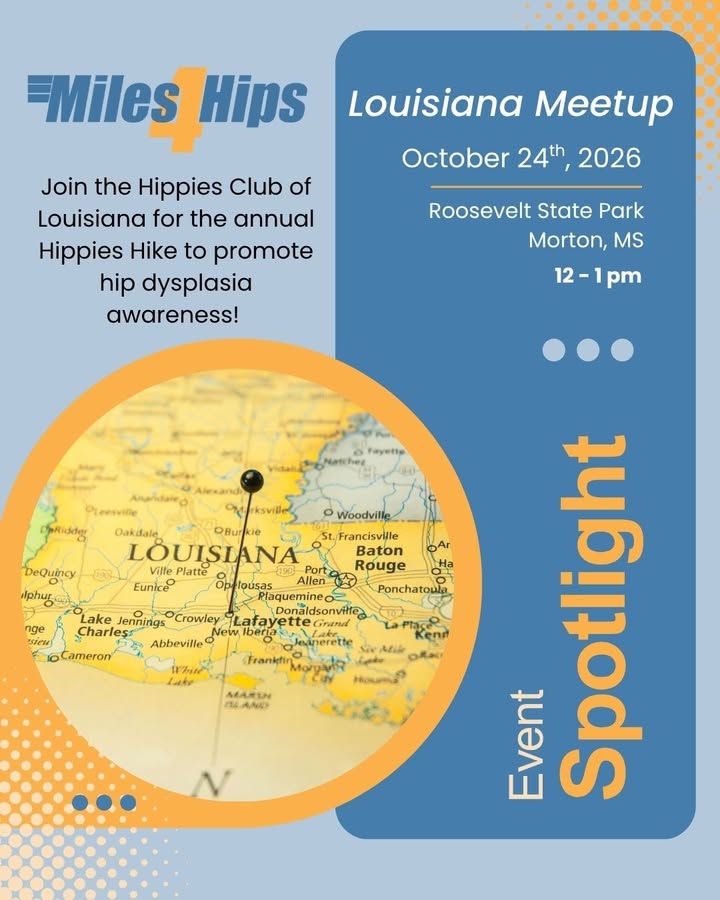
Event spotlight! Follow the link to learn more and to join: facebook.com/events/s/hippie-hike/4629106514003001/
Latest Videos
 Subscribe to my channel

Latest Newsletter

Contact Miles4Hips
Latest News
-
Hip Dysplasia Team Week!

We are excited to announce Hip Dysplasia Team Week on March 28 to April 3! We will have interviews with different members of the hip dysplasia team including patients, families, caregivers, healthcare providers and more! Follow us @miles4hips on Facebook and Instagram for updates!
-
The 5 W’s of Second Opinions

So, you think you should get a second opinion about your hip. What does that even mean? Why seek another opinion? Who should you see? Where do you choose to go? When should you seek another opinion? How do you make it happen? Click here to have your questions answered!
-
Hip Dysplasia: What’s With All the Angles?

LCEA? Tonnis Angle? Version? Alpha Angle? Have you wondered what’s with all the angles? Hip dysplasia experts may order a variety of special imaging and tests to help determine the best treatment for a patient. These are some of the most common measurements associated with the evaluation of hip dysplasia. Click here to learn more…
-
Linda’s Story

Linda, an adult hip dysplasia patient and illustrator, shares her story of complex hip dysplasia diagnosis and treatment and how she has used her experience to support others through development of her Adult Hip Dysplasia Rehab Strategies group Click here to read her story! We are always looking for new stories, no matter where you…
-
Miles4Hips Newsletter

Miles4Hips launched our very FIRST newsletter on January 31st, 2022. Board Member, Kaya Frazier, has taken on this project for Miles4Hips to help share hip dysplasia news, research, education, interviews, and awareness activities during the year. Please subscribe to our electronic mailing list to make sure you don’t miss access to our newsletter series as…
-
Our Stories

We have updated Our Stories page! The stories are now organized by categories. Check it out here! Infant, Child, Family Teen and Young Adult Adult PAO THR Femoral Osteotomy, Miserable Malalignment, and Other Complex Diagnosis If you would like to share your story fill out this google form, or email us at miles4hips@gmail.com.
-
Miles4Hips Newsletter

Miles4Hips is excited to launch our very FIRST newsletter on January 31st, 2022. Board Member, Kaya Frazier, has taken on this project for Miles4Hips to help share hip dysplasia news, research, education, interviews, and awareness activities during the year. Please subscribe to our electronic mailing list to make sure you don’t miss access to our…
-
Check out our Videos!
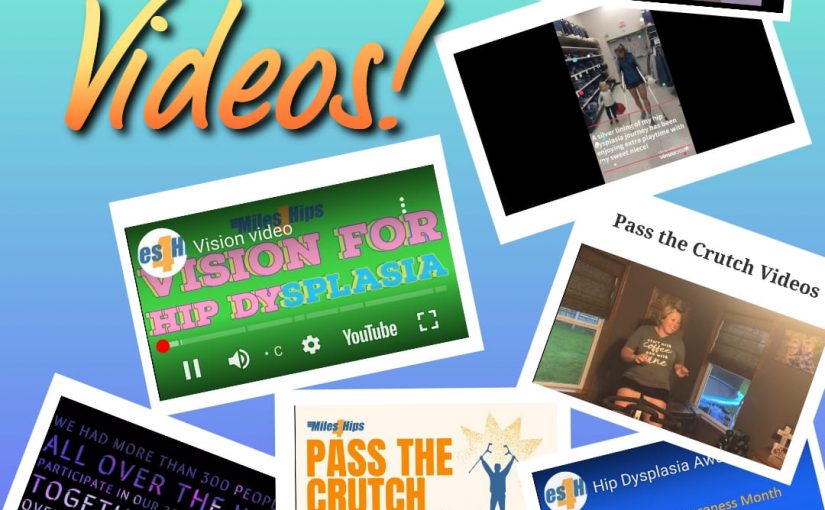
Have you visited our webpage recently? We have added a section for our videos! Check it out to look back on The Day of Movement, Pass the Crutch and more! We also have a section of resource and education videos. Click here to watch!
-
IHDI Research Updates
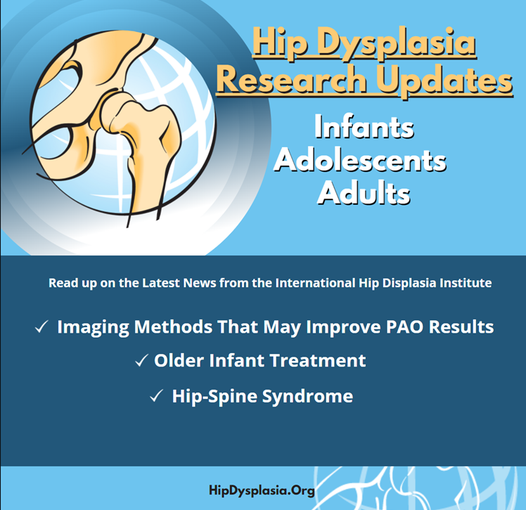
Click here to read the latest research updates from the International Hip Dysplasia Institute!

Latest News
-
Hip Dysplasia Team Week!
We are excited to announce Hip Dysplasia Team Week on March 28 to April 3! We will have interviews with different members of the hip dysplasia team including patients, families, caregivers, healthcare providers and more! Follow us @miles4hips on Facebook and Instagram for updates!
-
The 5 W’s of Second Opinions
So, you think you should get a second opinion about your hip. What does that even mean? Why seek another opinion? Who should you see? Where do you choose to go? When should you seek another opinion? How do you make it happen? Click here to have your questions answered!
-
Hip Dysplasia: What’s With All the Angles?
LCEA? Tonnis Angle? Version? Alpha Angle? Have you wondered what’s with all the angles? Hip dysplasia experts may order a variety of special imaging and tests to help determine the best treatment for a patient. These are some of the most common measurements associated with the evaluation of hip dysplasia. Click here to learn more…
-
Linda’s Story
Linda, an adult hip dysplasia patient and illustrator, shares her story of complex hip dysplasia diagnosis and treatment and how she has used her experience to support others through development of her Adult Hip Dysplasia Rehab Strategies group Click here to read her story! We are always looking for new stories, no matter where you…
-
Miles4Hips Newsletter
Miles4Hips launched our very FIRST newsletter on January 31st, 2022. Board Member, Kaya Frazier, has taken on this project for Miles4Hips to help share hip dysplasia news, research, education, interviews, and awareness activities during the year. Please subscribe to our electronic mailing list to make sure you don’t miss access to our newsletter series as…
-
Our Stories
We have updated Our Stories page! The stories are now organized by categories. Check it out here! Infant, Child, Family Teen and Young Adult Adult PAO THR Femoral Osteotomy, Miserable Malalignment, and Other Complex Diagnosis If you would like to share your story fill out this google form, or email us at miles4hips@gmail.com.
-
Miles4Hips Newsletter
Miles4Hips is excited to launch our very FIRST newsletter on January 31st, 2022. Board Member, Kaya Frazier, has taken on this project for Miles4Hips to help share hip dysplasia news, research, education, interviews, and awareness activities during the year. Please subscribe to our electronic mailing list to make sure you don’t miss access to our…
-
Check out our Videos!
Have you visited our webpage recently? We have added a section for our videos! Check it out to look back on The Day of Movement, Pass the Crutch and more! We also have a section of resource and education videos. Click here to watch!
-
IHDI Research Updates
Click here to read the latest research updates from the International Hip Dysplasia Institute!